




Top Structural Strengthening Methods Used in Construction
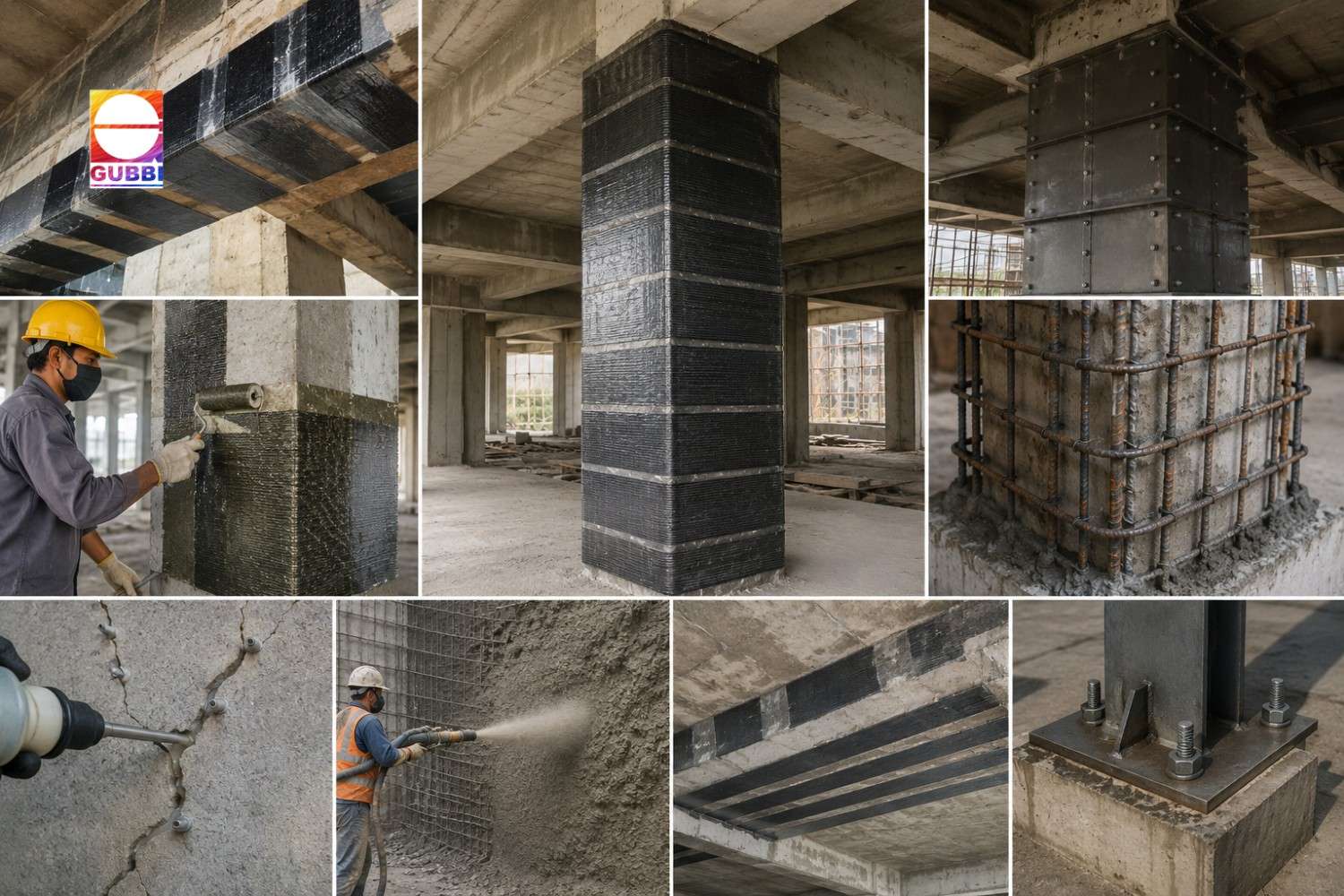
[edit] Introduction
Structural damage, ageing buildings, increased load requirements and environmental wear can significantly affect the safety and durability of a building. Over time, structures may develop cracks, weakened load-bearing elements, corrosion-related deterioration or reduced structural performance. This is where structural strengthening becomes essential.
Today, structural strengthening plays a critical role in modern construction, repair, rehabilitation and retrofitting projects. Instead of demolishing weakened structures, engineers use advanced strengthening methods to restore performance, increase durability and improve safety.
[edit] What Is Structural Strengthening?
Structural strengthening refers to the process of improving the load-bearing capacity, stability and overall structural performance of buildings or infrastructure that have weakened due to ageing, damage, corrosion, seismic activity, poor construction or increased operational loads.
The primary objective of structural strengthening is to restore structural safety while extending the lifespan of buildings and infrastructure.
Structural strengthening is commonly used in:
- Residential buildings
- Commercial structures
- Industrial facilities
- Bridges
- Chimneys
- Water tanks
- Infrastructure projects
[edit] Why Is Structural Strengthening Important?
Buildings naturally deteriorate over time. Factors such as moisture exposure, corrosion, poor maintenance, foundation settlement and structural overloading can weaken critical elements.
Common reasons for structural strengthening include:
- Visible structural cracks
- Corroded reinforcement steel
- Increased floor loads
- Building ageing
- Seismic strengthening requirements
- Structural modifications or expansion
- Damage caused by environmental exposure
Strengthening damaged structures helps avoid costly demolition and improves long-term structural safety.
[edit] Structural Strengthening Methods Used in Construction
Several advanced strengthening techniques are used depending on the severity of structural damage and project requirements.
[edit] Carbon Fibre Wrapping
Carbon fibre wrapping is one of the most advanced structural strengthening techniques used for beams, columns, slabs and reinforced concrete structures.
This method uses carbon fibre-reinforced polymer (CFRP) sheets bonded with epoxy to improve structural capacity.
[edit] Benefits of Carbon Fibre Wrapping
- Lightweight strengthening system
- High tensile strength
- Corrosion-resistant
- Faster installation
- Improved seismic resistance
[edit] Applications of Carbon Fibre Wrapping
- Reinforced concrete beam strengthening
- Column strengthening
- Crack repair
- Seismic retrofitting
Carbon fibre wrapping is widely preferred because it increases strength without significantly increasing structural weight.
[edit] Steel Jacketing
Steel jacketing is a traditional but highly effective structural strengthening method.
In this process, steel plates or jackets are wrapped around structural elements to improve load-bearing capacity.
[edit] Benefits of Steel Jacketing
- High structural reinforcement
- Increased compressive strength
- Improved seismic resistance
[edit] Applications of Steel Jacketing
- Column strengthening
- Beam strengthening
- Bridge rehabilitation
Steel jacketing is commonly used where substantial structural reinforcement is required.
[edit] Micro-Concrete Jacketing
Micro-concrete jacketing involves adding reinforced concrete around damaged columns or beams to increase structural performance.
This technique is particularly effective for ageing reinforced concrete buildings.
[edit] Benefits of Micro-Concrete Jacketing
- Improved load-bearing capacity
- Enhanced durability
- Better structural stability
[edit] Applications of Micro-Concrete Jacketing
- Reinforced concrete column rehabilitation
- Beam strengthening
- Structural repair
It is widely used in retrofitting projects.
[edit] Fibre-Reinforced Polymer (FRP) Wrapping
FRP wrapping uses fibre-reinforced materials such as:
These materials help improve structural performance while minimising additional structural load.
[edit] Benefits of FRP Wrapping
- Corrosion-resistant
- Lightweight
- Durable
[edit] Applications of FRP Wrapping
- Structural retrofitting
- Seismic strengthening
- Reinforced concrete rehabilitation
FRP systems are increasingly popular in modern construction.
[edit] Shotcreting and Guniting
Shotcreting is a concrete repair and strengthening technique in which concrete or mortar is sprayed at high velocity onto damaged surfaces.
[edit] Benefits of Shotcreting
- Repairs deteriorated concrete
- Enhances durability
- Improves structural performance
[edit] Applications of Shotcreting
This method helps restore damaged concrete efficiently.
[edit] Beam and Column Strengthening
Beams and columns are critical structural components.
When weakened, engineers strengthen them using methods such as:
- Carbon fibre wrapping
- Steel jacketing
- Concrete jacketing
Strengthening beams and columns improves:
- Load capacity
- Stability
- Structural safety
[edit] Epoxy Injection for Crack Repair
Cracks in concrete structures can compromise durability and performance.
Epoxy injection helps restore strength by filling structural cracks.
[edit] Benefits of Epoxy Injection
- Restores structural integrity
- Prevents crack propagation
- Improves durability
[edit] Applications of Epoxy Injection
[edit] Structural Retrofitting
Structural retrofitting strengthens existing buildings to meet modern safety standards.
This method is commonly used for:
- Earthquake-prone areas
- Ageing structures
- Buildings requiring load upgrades
Retrofitting improves structural performance while extending service life.
[edit] Signs a Building May Need Structural Strengthening
A structure may require structural strengthening if any of the following are observed:
- Cracks in walls or beams
- Corrosion damage
- Sagging slabs
- Reduced structural performance
- Increased vibration
- Settlement issues
Early intervention helps prevent major structural failures.
[edit] Benefits of Structural Strengthening
Investing in structural strengthening provides several long-term benefits.
[edit] Improved Safety
Strengthening weakened structures reduces risks and enhances occupant safety.
[edit] Increased Structural Lifespan
Proper rehabilitation extends the lifespan of buildings and infrastructure.
[edit] Cost Savings
Strengthening existing structures is often more cost-effective than reconstruction.
[edit] Improved Seismic Resistance
Advanced strengthening techniques can improve performance during seismic events.
[edit] Enhanced Load Capacity
Buildings can safely accommodate increased operational requirements.
[edit] The Importance of Professional Structural Strengthening Services
Every building presents unique structural challenges.
Qualified structural engineers can help ensure:
- Accurate structural assessment
- Appropriate strengthening method selection
- Quality workmanship
- Long-term performance
[edit] Conclusion
Modern construction increasingly depends on advanced structural strengthening methods to restore damaged structures and improve safety.
Whether through carbon fibre wrapping, steel jacketing, micro-concrete jacketing, shotcreting or retrofitting, strengthening weakened structures can increase durability and help prevent costly failures.
Selecting the most appropriate strengthening method can significantly extend structural lifespan while ensuring long-term stability, safety and performance.
Featured articles
Check out some of the best features and news from Designing Buildings as well as key stories from around the web.

The Building Safety Regulator announces a call for evidence.

Government approach could undermine delivery and regeneration.
World's first mass timber data centre.

The overlooked environmental aspect of data centre development.
Introduction to radon awareness

New technical information sheet published by CIOB.

Updated supplier guide can help electrical contractors engage with NHP.

CIAT confirm the winners of the 2026 architectural technology awards.

Government launches a one stop shop for flood preparedness.

Sir Edwin Lutyens: Britain's greatest architect? Book review.

CIOB publishes free template to help assess and manage risks.
ECA's reflections on Party Conference season

Burnham wants to be confident of winning before asking for a fresh mandate.
New Chief Construction and Scientific Adviser

Sergio Cavalaro, Professor of Infrastructure Systems at Loughborough University.
Building safety levy for England

CIAT publish estimator tool for members.